Friday, January 31, 2020

What Is the Harlem Renaissance? January 31, 2020

Focus: What is the Harlem Renaissance, and how did it shape our cultural identity?

1. Warming up with Grammar Quiz #5: Parallel Structure

2. Taking care of the following tasks for the week:
  • Independent Reading Log #3 OR reading if you're not at least halfway through your book.
  • The Harlem Renaissance art activity you began on Thursday (see Thursday's blog for links, directions, and details)

3. Gathering a little background on the Harlem Renaissance

Please open up your notebooks and label a page "Harlem Renaissance Documentary." As you watch the short video, process what you're watching by jotting down the following:

  • What / when / where was the Harlem Renaissance?
  • How did it shake things up? In other words, what was new about it? What did it change?
  • What did it contribute to our American cultural identity?

HW:
1. For MONDAY: Make sure you have spent at least 4 hours of reading your independent reading book and are least halfway through. Fill out that little slip of paper if you have not yet done so.

2. For NEXT FRIDAY: Spend 60 more minutes outside of class reading your book.

Thursday, January 30, 2020

Song of the Towers: January 30, 2020

Focus: How might Harlem Renaissance art help us explore our own themes?

1. Warming up with book talks and a light touch of grammar: Parallel structure

2. Investigating "Song of the Towers" by Aaron Douglas (my favorite) with an MMM approach and extra step: Which figure is you? Why?

Song of the Towers, by Aaron Douglas (1934)


3. Offering you a preview of tomorrow and exploring other Harlem Renaissance artists you may wish to use in your Renaissance Little Project

Aaron Douglas
Jacob Lawrence
Palmer Hayden
Lois Mailou Jones

Your goal: Use a Google doc today to start collecting paintings that you might want to use in your Renaissance Little Project. Maybe they relate to the poem you wrote at the beginning of class. Maybe they remind you of something we've watched/read/talked about this semester. Maybe you just like the look of it.
  • Paste the paintings and their links into your blog. 
  • Be sure to include their titles, artists, and if possible, dates.
  • For at least THREE of the paintings, try an MMM approach (moments, movements, meanings). You can type this on your blog underneath the paintings.
  • Click HERE for an example from last year.
HW:
1. By this FRIDAY, JAN 31, you should be at least halfway through your book. Catch up now if you have fallen behind.
  • Also, if you have not turned in your second reading log yet, please take care of that ASAP.
2. Ongoing: Start prepping your book talk; make sure you're ready to go on your assigned date.


3. If you are absent, use the checklist and the class blog to make up the work you have missed.

Wednesday, January 29, 2020

Approaching the Halfway Point: January 29, 2020

Focus: Now that we're halfway through our first unit, how are we doing?

1. Warming up by checking in with a one-minute meditation, your checklist, and cell phone reminders

2. Relaxing into your independent reading books; remember that you should be at least halfway through as of this Friday

  • I will be walking around to check your reading logs on your phone apps (you should have at least 4 hours of reading time recorded at this point).

3. Strengthening our grammar skills with Grammar Lesson #5: Parallel structure

HW:
1. By this FRIDAY, JAN 31, you should be at least halfway through your book. Catch up now if you have fallen behind.

  • Also, if you have not turned in your second reading log yet, please take care of that ASAP.

2. Ongoing: Start prepping your book talk; make sure you're ready to go on your assigned date.

3. If you are absent, use the checklist and the class blog to make up the work you have missed.

Tuesday, January 28, 2020

I, Too: January 28, 2020

Focus: How do other poets' verses help us discover our own verse?

1. Warming up with Whitman's and Hughes' verses: "I Hear America Singing" and "I, Too" using a small-circle MMM approach

2. Reading Julia Alvarez's response to "I, Too" (and hopefully listening to one of my student's poetry projects)

3. Composing your own response poem to "I, Too" or "Theme for English B"; sharing beautiful lines

HW:
1. By this FRIDAY, JAN 31, you should be at least halfway through your book. Catch up now if you have fallen behind.

  • Also, if you have not turned in your second reading log yet, please take care of that ASAP.

2. Ongoing: Start prepping your book talk; make sure you're ready to go on your assigned date.

3. If you are absent, use the checklist and the class blog to make up the work you have missed.


Monday, January 27, 2020

What Will Your Verse Be? January 27, 2020

Focus: What will your verse be? 

1. Warming up with three good things and this week's checklist

2. Enjoying your independent reading book

3. Perusing the overview of this mini-project with a little inspiration from "What Will Your Verse Be"?

HW:
1. By this FRIDAY, JAN 31, you should be at least halfway through your book. Catch up now if you have fallen behind.

  • Also, if you have not turned in your second reading log yet, please take care of that ASAP.

2. Ongoing: Start prepping your book talk; make sure you're ready to go on your assigned date.

3. If you are absent, use the checklist and the class blog to make up the work you have missed.

Friday, January 24, 2020

The Great Migration: January 24, 2020

Focus: How did racial violence in the South bring about movement and change?

Take a look at your checklist! How did you do?

1. Warming up with our first round of book talks (and the first goodie basket!)

  • One caveat: At some point, after somebody's book talk, you need to ask at least one genuine question.

2. Composing independent reading Thought Log #2 (and reading a bit since we didn't have Monday)

3. Watching a mini documentary on The Great Migration

What?
What was the Great Migration? What brought it about?

When? Where?
What time period are we talking about? From where to where? Major cities affected?

Why?
Why is the Great Migration important for us to know about? How did it shape us as a nation?

HW:
1. For MONDAY: Continue reading your independent reading book and bring it to class. 

2. By next FRIDAY, JAN 31, you should be at least halfway through your book. Catch up now if you have fallen behind.

2. Ongoing: Start prepping your book talk; make sure you're ready to go on your assigned date.

Thursday, January 23, 2020

The Racial Mountain: January 23, 2020

Focus: What is the racial mountain? 

1. Warming up with a "quiz" on Grammar #4: Modifiers

2. Considering our history of racial violence with a photo from 1919

3. Illustrating the "Racial Mountain" that Hughes uses as his central metaphor
  • Draw a mountain. At the top are your big goals: Where / who do you hope to be in ten years?
  • Draw yourself at the bottom.
  • What obstacles must you conquer in order to get to the top?
Watch this video. 
  • Think/pair/share: What mountain are we facing in America today?
4. On your own, finish reading the Langston Hughes' essay, "The Negro Artist and the Racial Mountain"
  • Create a new MMM chart to explore this essays moments, movements, and meanings.
HW:
1. BY TOMORROW: Make sure you have spend 60 minutes outside of class with your book; you will be asked to compose your next thought log in class.

2. If you're delivering your book talk tomorrow, please review the blue overview and be ready to go at the beginning of class.

Wednesday, January 22, 2020

Your English Present and Future: January 22, 2020

Focus: What do we need to do to feel good about English this week and next year?

Please sign up for a one-minute speech. Write the date down in your student calendar.

Also, keep track of your checklist. Requests for the Friday goodie basket?

1. Warming up with independent reading

2. Considering your English options for next year and taking a survey

HW:
1.  BY THIS FRIDAY, please watch the Harlem Renaissance documentary linked below. It will give you the background on the Harlem Renaissance that you need to succeed this week. You can start the documentary 15 minutes into it

*WARNING: If you choose to watch the first 15 minutes (not required), there are upsetting photographs of lynchings between minutes 5 and 7.*

So you could watch about 15 minutes a night, or you could watch it all in one gloriously informative off hour.  Do what works for you and your schedule.

Documentary link: Making a Way Out of No Way

On Friday, you will be asked to take about 15 minutes to fill out a reflection sheet on the documentary. It will be divided into Level 1, 2, and 3 thinking. As long as you watched the documentary, you will be just fine. No need to memorize anything.

2. By NEXT MONDAY: Spend 60 minutes outside of class reading.

Tuesday, January 21, 2020

Strange Fruit: January 21, 2020

Focus: What do we need understand better or differently about post-Civil War America?

1. Warming up with three good things and your new "Weekly Accomplishment List"

2. Prepping with Grammar Lesson #4: Modifiers

3. Understanding our history of racial violence: Lynchings

Step 1: Dedicate a page in your notebook to three columns: Moments, Movements, and Multiple Meanings

Step 2: As a class, listen to Billie Holiday sing "Strange Fruit" (1939), using the MMM approach to discuss it.

Step 3: Individually, fill in the gaps in your knowledge of the Reconstruction with the links below and any other research you wish to conduct. Keep using your MMM chart to gather and process info.
  • Click HERE to hear people's stories.
Step 4: With a small group, share your findings and discuss your response to today's focus question.

HW:
1. TOMORROW: Bring your independent reading book to class.

2. BY THIS FRIDAY, please watch the Harlem Renaissance documentary linked below. It will give you the background on the Harlem Renaissance that you need to succeed this week. You can start the documentary 15 minutes into it

*WARNING: If you choose to watch the first 15 minutes (not required), there are upsetting photographs of lynchings between minutes 5 and 7.*

So you could watch about 15 minutes a night, or you could watch it all in one gloriously informative off hour.  Do what works for you and your schedule.

Documentary link: Making a Way Out of No Way

On Friday, you will be asked to take about 15 minutes to fill out a reflection sheet on the documentary. It will be divided into Level 1, 2, and 3 thinking. As long as you watched the documentary, you will be just fine. No need to memorize anything.

3. By NEXT MONDAY: Spend 60 minutes outside of class reading.

Friday, January 17, 2020

Exploring Your Book's Exposition: January 17, 2020

Focus: What is your independent reading book teaching you about cultural perspective?

Image result for jim crow and blackface

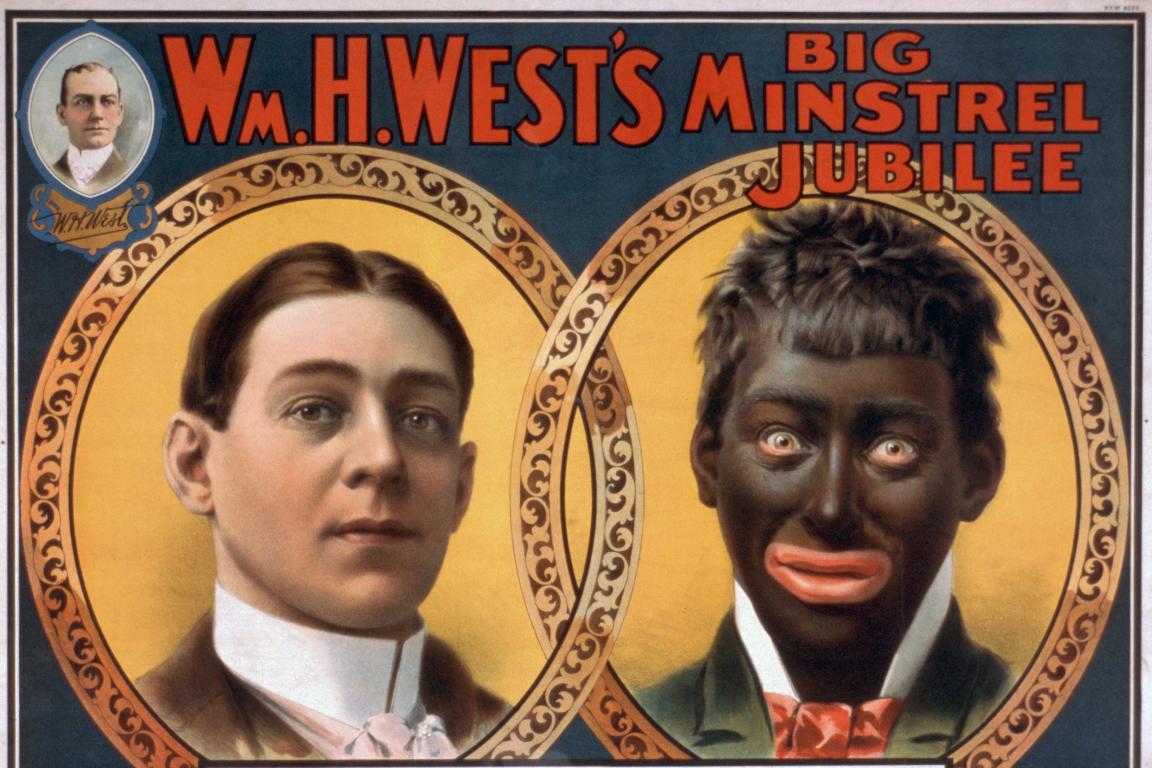
1. Warming up with "Why Won't Blackface Go Away?


  • What's the danger in blackface costumes and performances?
  • Why do you think blackface hasn't gone away?
  • Why is important for us to be aware of the history of blackface? Why does this history of stereotypes need to be part of our cultural perspective?


2. Revisiting yesterday's notecatcher on Ethnic Notions  

3. Sending me a screenshot of your app's reading log for the week

4. Exploring your reading journal options and completing Journal Entry #1

HW:
1. By TUESDAY: Finish your first reading journal if you did not finish in class.

2. By next FRIDAY: Spend 60 minutes outside of class reading your book and using the app to track your reading. If your week looks busy, take care of this over the weekend.

Thursday, January 16, 2020

Confronting Dangerous Stereotypes: January 16, 2020

Focus: What power do 19th century stereotypes hold?

1. Warming up by comparing a California textbook to a Texas textbook: Click HERE
  • How can a location shape the way a subject is taught?
  • Why is it so important to read slave narratives (instead of just textbooks about slave narratives)?

2. Testing your pre-existing background knowledge on 19th century stereotypes
  • Turn to the Ethnic Notions reflection sheet on page 19 in your blue packet.
  • What do you already know about these stereotypes?

3. Viewing an award-winning documentary and understanding the underlying dangers of black stereotypes
  • Warning of graphic image 20 and 22 minutes in, after "offense to civilization" and watermelon images.
  • Skip from 26 to 42 min.

4.  Discussing historical stereotypes in small groups/as a class

If you're feeling stuck, here are some links that might help get you thinking:
Comments on Michelle Obama
2016 Prison Statistics
Aunt Jemima and other Commercial Objects
Little Black Sambo (look at what it's used for and the comments underneath)
Tom and Jerry cartoon and discussion of Amazon warning
Children's Songs with Racist Histories


HW:
By TOMORROW: 
  • Spend 60 minutes reading your independent reading book OUTSIDE of class. That's 15 minutes of homework a night. 
  • On Friday, you will be completing Thought Log #1 and taking a screenshot of your reading app log (Leio or Read More). There should be 2 hours logged (1 hour in class; 1 hour outside of class). This will be an Attempt & Completion grade.
  • BRING YOUR BOOK TO CLASS TOMORROW.
  • Also, we will have a "quiz" on Grammar Lesson #4 tomorrow (no memorization required).


Wednesday, January 15, 2020

Reading about Race: January 15, 2020

Focus: What are our authors teaching us about cultural identity?

1. Warming up with an overview of independent reading book talks

2. Reading your independent reading book; remember to record your reading with Leio or Read More

3. Wrapping up with Grammar Lesson #4

HW:
By FRIDAY: Spend 60 minutes reading your independent reading book OUTSIDE of class. That's 15 minutes of homework a night. On Friday, you will be completing Thought Log #1 and taking a screenshot of your reading app log (Leio or Read More).


Tuesday, January 14, 2020

The Myth of the Happy Slave: January 14, 2020

Focus: What is the power in telling your own story?

1. Warming up with a a recap of Grammar Lessons 1-3

2. Questioning the myth of the happy slave

The myth of the happy slave: 19th century and early 20th century images

  • Jot down your thoughts in your writer's notebook.
  • Look carefully at the depictions of slaves in these images. What details strike you?
  • What story of slavery do these images tell, and how?
  • Why do you think these images were so popular (well into the 20th century)?
  • Open the slavery images from Wednesday. Flip back and forth between those images and these. What is problematic about the myth of the happy slave?

Frederick Douglass addresses the danger of the "happy slave" image

Children's book promotes the happy slave

3. Reading either Douglass' Chapter 10 or Harriet Jacob's "Incidents in the Life of Slave Girl"

  • In your notebook, make a quick chart where you write down and reflect upon at least THREE lines from the story, using these questions to guide you:
    • What is the power in telling your own story?
    • Why are the slave narratives an important part of our cultural identity as Americans?

HW:
1. By FRIDAY: Spend 60 minutes reading your independent reading book OUTSIDE of class. That's 15 minutes of homework a night. On Friday, you will be completing Thought Log #1 and taking a screenshot of your reading app log (Leio or Read More).

2. WEDNESDAY: Bring your book to class.

Monday, January 13, 2020

Where We're From: January 13, 2020

Focus: What role does cultural identity play in the way we speak?

1. Warming up with three good things

2. Considering how you cultural identity impacts the way you speak: https://www.nytimes.com/interactive/2014/upshot/dialect-quiz-map.html
  • What does the way you speak reveal about where you're from?
  • Can you think of any personal experiences with this?
  • Did you like being put into a group of people on a map?
3. Downloading the reading apps, going over reading reflection choices, and starting to read
  • What does the way a narrator/character speaks reveal about where he or she is from?
  • If you have an iPhone, you will use Leio
  • If you have an Android, you will use Read More
HW:
1. By FRIDAY: Spend 60 minutes reading your independent reading book OUTSIDE of class. That's 15 minutes of homework a night. On Friday, you will be completing Thought Log #1 and taking a screenshot of your reading app log.

2. WEDNESDAY: Bring your book to class.

Friday, January 10, 2020

From Man to Slave: January 10, 2020

Focus: What does it take to disempower a human?

1. Warming up with a few photographs and the importance of multiple perspectives

2. Reading original excerpts from slaves, slave owners, 19th century documents, and historians (travelling groups of 3-4) with this reflection sheet

3. Following up with discussions of yesterday's images, today's quotations, and last night's Douglass reading:
  • How were slaves physically disempowered?
  • How were slaves socially disempowered?
  • How were slaves mentally/emotionally disempowered?
  • What do we gain by looking at slavery from multiple points of view?
4. Reading Chapter 10 together

  • How did Douglass take his power back?
  • Why is it so important that he writes his own narrative?

HW:
For Monday: 

  • If we did not finish reading and annotating Chapter 10 in Douglass, please finish it tonight.
  • Bring in your independent reading book and signed blue letter.

Thursday, January 9, 2020

Powerful Narratives of the Disempowered: January 9, 2020

Focus: What does it take to disempower a human?

*Please turn in your signed class syllabus/expectations.*

1. Warming up with a book talk

2. Observing images of slavery

Peruse the images at your own speed. In your notebook, make some notes on your specific observations of each image:
  • What are you looking at in each one? What details strike you? What story is being told here?
  • Which images surprise you/are new to you?
  • What is your reaction to each one?
  • What does each image reveal about the practice of slavery?
  • What do the images reveal about specific ways in which slaves were disempowered?
Sharing aloud
  • Who are you (think back to your "I Am" poem), and how does this impact the way you draw meaning from these images?
  • How are you being pushed to understand in a new way different people's experiences?
3. Revisiting the concept of perspective; starting the first chapter of Narrative of the Life of Frederick Douglass
  • Mark up lines that connect to the images/quotations from today's class.
  • Mark up lines that respond to our focus question: What does it take to disempower a human being?
HW:
1. For TOMORROW: 
  • Finish reading Chapter 1 in Douglass (through page 3 in your packet) annotating for passages that reveal something about power, disempowerment, and/or empathy.
2. For NEXT MONDAY: Bring your independent reading book and signed letter to class.

Wednesday, January 8, 2020

Culturally Charged Stories: January 8, 2019

Focus: What aspects of our culture shape our perspective?

1. Finding multiple stories in a single photo

2. Considering cultural identity as you browse books

3. If time allows, getting the Leio (iPhone) or the Read More (Android) app

HW:
1. By Thursday: Please have your parents/guardians sign the course syllabus (we'll go through it tomorrow).

2. By next Monday: Bring your independent reading book to class, along with the signed independent reading letter.

Tuesday, January 7, 2020

It's a New Year! January 7, 2020

Focus: What does American Literature look like in 2020?

1. Warming up with three good things and what's new in American Lit!

2. Considering your cultural identity with "I Am" poetry

  • Composing your poems
  • Sharing one stanza or one line
  • Debriefing the process and the results

3. Setting up our first unit

  • Offering you an overview of our first unit on race and cultural identity
  • Browsing and selecting books
HW:
1. By Thursday: Please have your parents/guardians sign the course syllabus (we'll go through it tomorrow).

2. By next Monday: Bring your independent reading book to class, along with the signed independent reading letter.

Finishing Strong: May 18-20, 2020

Focus: How do we finish strong in American Lit? 1. Warming up with three good things! 2. Gathering all books that you've borrowed...